Built by someone who's been doing this since before SEIS existed
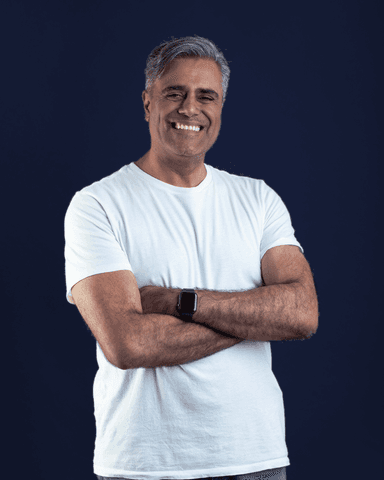
I'm Sanjay. I started my career in corporate tax at Arthur Andersen, where my clients included startups and venture capital firms. Back then there was no SEIS – only EIS – and I spent my time helping clients structure their businesses, making successful EIS applications and fundraises, and putting in place new structures for clients making investments and leveraged buyouts.
After a decade in corporate finance and ventures in the media and entertainment sector, I set up on my own. When SEIS launched in 2012, I founded the UK's first SEIS fund. Since then, I've sat on every side of the table: as the fund deploying investment, as the adviser helping founders get investor-ready, and as a founder raising myself.
In 2020 I had a serious accident on my bike. Recovery took four years and seven surgeries. When I first came out of hospital – nowhere near recovered – I started again from scratch and went through the whole founder journey another time, from nothing. So I know what being up against it actually feels like: the work that has nothing to do with your product pulling you away from it, the rejections, the investors who go quiet and never come back. The eco-system has become so extractive.
Seisly covers four stages because I've been through all four, and the last time round I did them with no team, no runway and no advantage.
Starting up. I've incorporated companies for myself, and I've watched founders make decisions at the start of a company's life, about share structure and share classes and the numbers on the statement of capital, that quietly cost them years later. Nobody tells you at the time. Companies House certainly doesn't.
Getting investment ready. Two decades of EIS applications, starting in corporate tax at Arthur Andersen before SEIS existed, and SEIS from the day it launched. Hundreds of pitch decks, too. I've written them, I've reviewed them, and I've read them from the other side of the table as the fund deciding whether to invest.
Raising. I've raised for my own companies and I've been the investor being approached. I know what a good approach looks like arriving in an inbox, because I've turned down plenty of bad ones.
Growing. A decade in corporate finance in media and entertainment: cap tables, option schemes, leveraged buyouts. The structures that either survive diligence or quietly fall apart during it.
I've also advised on and led multiple exits: trade sales, sales to private equity and to listed companies, and IPOs. Seisly will cover that stage in time. Until it does, I'll talk it through with you directly, because when you're starting up it pays to begin with the end in mind. The decisions that matter at an exit are made years earlier, and almost nobody tells you which ones they are.
I built Seisly because most early-stage founders can't justify a full advisory engagement, but they do need someone who knows which things HMRC actually tests. That isn't form filling. It's judgement, built from doing this for two decades, and it turns out most of it can be encoded. Founders were either paying for advice they didn't yet need, or skipping the step and taking the rejection that follows. Where a situation is genuinely complex, we refer to specialist advisers in our network who are set up for that kind of work.
Everything I've learned from two decades of EIS applications, and from SEIS since it launched, is encoded in a diagnostic that tells you where you actually stand before you spend anything. What it costs and what's included is on the pricing page, and it changes as we build.
If you have questions, find me on LinkedIn. If you want a quick read on whether your raise has a problem, book a free thirty-minute diagnostic call. To talk through your own situation in depth, across SEIS, EIS, start-up funding options, getting investor ready, investor outreach and exit planning, you can book a paid hour with me for £150: an hour of advice about your specific circumstances, before I guide you to which product(s) to use.